
Modern cladding
A facade is the face of a home. Not only does it protect against wind and weather, it also determines the first impression. It is therefore logical that more and more people are choosing modern cladding that suits their style, comfort requirements and vision of the future. But the possibilities are endless and the price differences not small.
Warm wood or sleek aluminum? Is composite the golden mean? What about crepi, whitewash or stone strips? In this guide, we get you started with a clear comparison of the most popular modern cladding materials, including their pros and cons. Do you still have questions after reading? Do not hesitate to contact Stevens Hout.

Wooden cladding
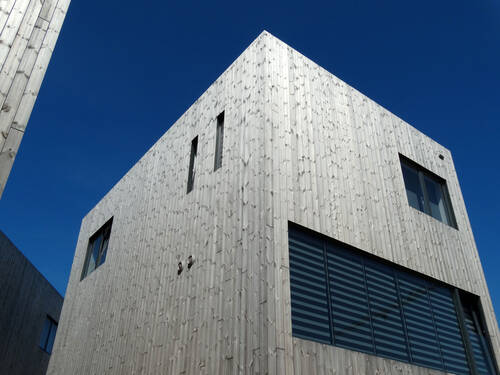
Wood is a natural material often used as cladding for exterior walls. It consists of boards or slats, usually in ThermoWood, cedar or padouk. You attach these mechanically to a wood support structure with ventilation cavity. Wooden or ThermoWood cladding can be installed horizontally or vertically.
Wood, which ages beautifully when left untreated, gives a warm, timeless and authentic look. This modern cladding is an excellent match for contemporary architecture with natural accents, ecological homes and renovations with warm appeal. Wood with finish offers even more advantages, such as longer life.
Advantages of wooden cladding
- Natural look
- Ecological and renewable
- Easy to edit and customizable
- Grays beautifully when untreated
Disadvantages of wooden cladding
- Regular maintenance required (unless you choose natural graying or wood with a finish)
- Not all woods are equally durable
Composite cladding
Composite is a mixture of wood fibers and plastic. These panels are colorfast, dimensionally stable and low-maintenance. Thanks to click systems and pre-assembled profiles, you easily attach them to a wooden or metal support structure.
Composite is designed to combine the look of wood with the benefits of plastic. Visually, it resembles sleek finished wood, but in a more uniform and modern form. Of course, pure wood remains more ecological than this combination of wood and plastic.
Looking for comfort and convenience? Composite or wood cladding with trim is the ideal choice for new construction homes with a sleek look.
Advantages of composite facades
- Low maintenance
- UV and weather resistant
- Available in a variety of colors and textures
Disadvantages of composite facades
- Less environmentally friendly than real wood
- Not fully recyclable
- May eventually discolor or deform under extreme heat
Aluminum cladding
Aluminum siding consists of lightweight metal panels or sidings that fit together beautifully. The material is light, strong, rust-proof, durable, and maintenance- and rust-free. You install the panels horizontally or vertically with screws or invisible fasteners on a metal or wood support structure. The panels fit tightly together and can be placed horizontally or vertically.
The end result is a modern, minimalist facade with an industrial touch. So we often see it in sleek, contemporary homes, or architectural projects with lots of glass and metal accents. Tip from Stevens Wood: our black ThermoWood triple profiles look similar to black aluminum triple profiles, but are a lot cheaper.
Advantages of aluminum cladding
- Maintenance-free
- Durable and fully recyclable
- Perfectly sleek and modern view
Disadvantages of aluminum cladding
- High purchase price
- Less warmth and atmosphere
- Clearly industrial look that doesn’t appeal to everyone
Crepi (facade plaster)
Crepi is a decorative plaster based on synthetic resin or mineral composition. It is sprayed or puttyed directly on the facade and often combined with exterior insulation for better energy performance. The substrate must be stable and dry for good adhesion. After application, the surface is smoothed or slightly textured, depending on the finish.
Crepi gives a facade a uniform, sleek and (if desired) colorful look. Thus, this finish suits sleek new construction and renovations where a uniform, modern look is desired. The disadvantage of popular white crepi is that it ages quickly. A more durable alternative are the painted white planchettes from Stevens Wood, for which we provide a 10-year warranty.
Advantages of crepi cladding
- Relatively inexpensive
- Seamless, even finish
- Good insulation layer if combined with exterior insulation
Disadvantages of crepi cladding
- Prone to algae, dirt and cracking
- Regular cleaning and sometimes repainting required
- Less durable in driving rain or poor orientation
Stone strips as a modern facade finish
Stone strips are thin adhesive bricks that mimic the appearance of brick or natural stone. You apply them with adhesive to a supporting surface (such as insulation boards or the existing facade). You fill in the joints with mortar, as with traditional masonry.
The result is barely distinguishable from a classic masonry facade. Therefore, this modern cladding is the best choice when trying to combine the traditional look of brick with modern construction techniques.
Advantages of stone strips
- Appearance of brick without thickness of traditional walls
- Relatively light and easy to install
- Low maintenance
Disadvantages of stone strips
- Non-bearing
- Limited recovery options in the event of damage
- More expensive than classic crepi
Slate cladding
Slate facades consist of overlapping slabs of natural slate or fiber cement. Each slate is attached individually to a wooden structure with nails or hooks. The overlapping placement provides a waterproof and windproof finish.
Slates are ideal for complex shapes and curved facades. They give your home a textured, sleek and unique texture. That’s why you’ll find slates primarily as finishes on architectural homes, passive houses and other homes with distinct character.
Advantages of slates
- Highly durable and weather resistant
- Low maintenance
- Striking, textured look
Disadvantages of slates
- Labor-intensive placement
- Limited style variation
- Higher placement cost
Caulking
Caulking is a technique in which a thin lime plaster is smeared onto the facade (usually an existing brick wall) with a brush. The layer of lime remains visible and accentuates the structure of the masonry underneath. Lime plastering is done manually and requires skill for an even result.
The facade remains vapor-permeable and retains its natural breathability. The appearance is rustic, matte and even, with a soft shadow effect. Therefore, this cladding is a perfect fit for renovations of older homes or new construction in a country or pastoral style.
Benefits of caulking
- Authentic, artisanal look
- Conceals imperfections and joints
- Vapor-permeable and breathable
Disadvantages of caulking
- Needs maintenance and repetition after several years
- Less sleek than other modern finishes
- Limited color choice (mostly white or earth tones)
Discover the modern cladding to suit your client’s needs
The range of modern cladding today is impressively large. Each material has its own look, advantages and downsides. What ultimately matters is what your customer values: natural warmth, ease of maintenance, price, durability or a distinct design?
Therefore, take your customer’s taste and budget into account. And if they are looking for a natural, stylish and durable solution? Then wood from Stevens Wood is an excellent choice.
We offer a wide range of profiled cladding and finish cladding. With over 90 years of experience, a wide range of ThermoWood and other quality timbers, and expert custom advice, we are ready to make your facade project a success. Feel free to contact us for inspiration, advice or a quote.