
Properties of wood
The importance of wood characteristics
Knowing and recognizing the properties of wood is important for choosing the right type of wood for your project. This is because they all play a role when you work your wood or use it as a construction material. Using the characteristics, you will discover more about specific types of wood and compare them with each other.
In addition, properties of wood are also – literally and figuratively – more superficial. What markings does it have, and what color? Has it been treated or not? And does it have flaws or defects, which may or may not be permissible? Find out all about wood characteristics, or ask us your question.

Important characteristics of wood
Wood is a natural product. That means that no two beams or boards are the same. Not when they are of the same wood species, not even when they come from the same tree. To know whether it is suitable as wood for timber construction, as cladding or as deck boards, we look at the main characteristics of the wood.
- Physical properties: such as moisture absorption capacity, shrinkage and swelling, and deformations, all of which are related.
- Durability classes: from class 1 to class 5, this designation says more about the longevity of ThermoWood, for example.
- Mechanical properties: how does the wood respond to different forces? For example, you will find out the bending strength and hardness.
- Fire behavior: with different types of wood, it takes shorter or longer for a charcoal layer to form on the outside.
For example, ThermoWood is more durable than softwood. And spruce is lighter than Douglas fir, so it also burns much faster. Not sure what the ideal wood species is for your project? Contact Stevens Wood and rely on more than 90 years of experience in the lumber industry.
‘Flaws’ are also important properties of wood
The beauty of wood is that no board is perfect. Some imperfections only impact the look of the wood. Others, in turn, potentially reduce durability or strength. The best-known “flaws” in wood are knots, cracks and fissures.
How many and what faults wood has depends on the species and origin, among other things. Stevens Wood specializes in recognizing faults and guarantees intensive checks, both at production and arrival of the wood. Thus we offer the right wood for the right application.
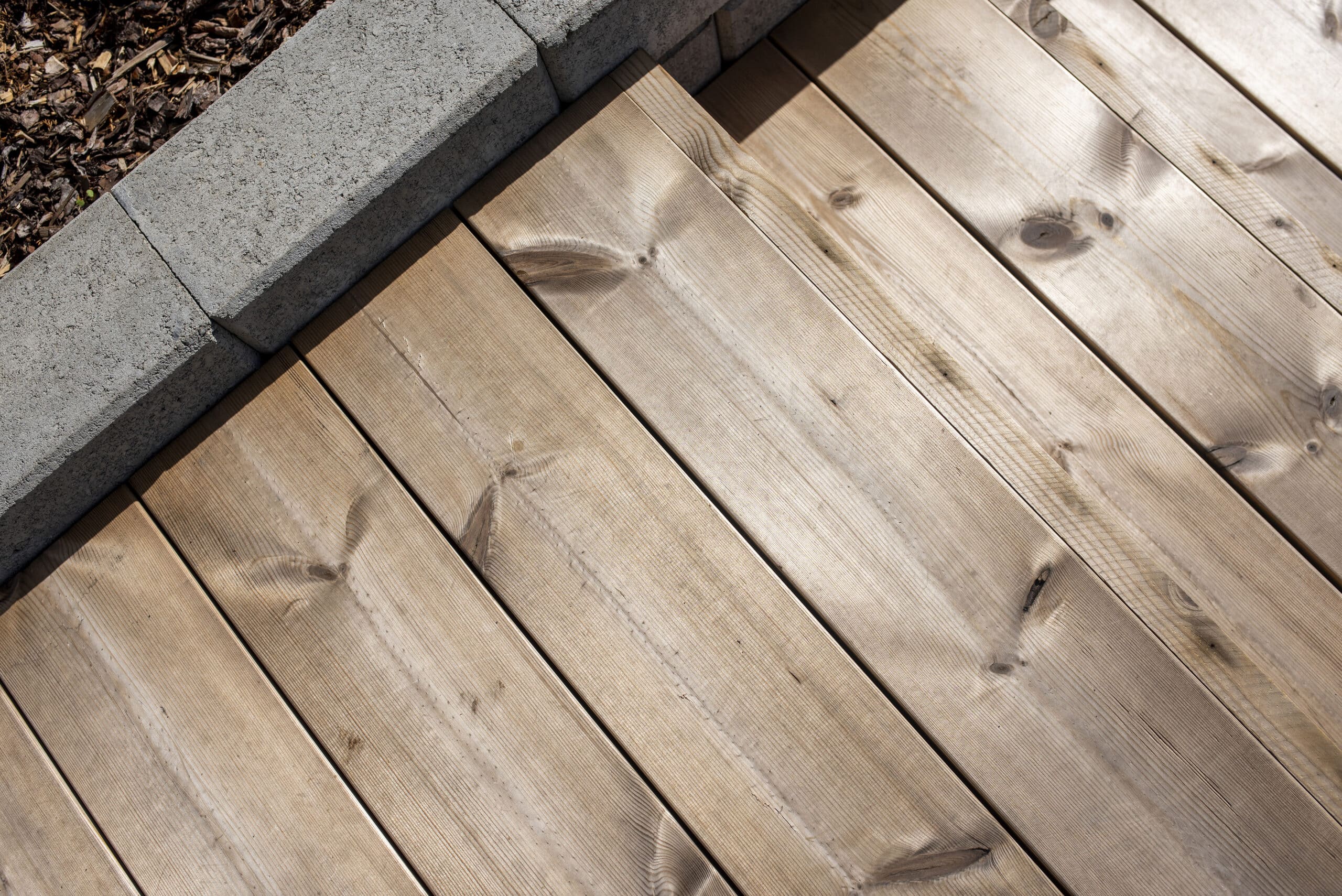
Common errors in wood
Threaded gradient
An indication of how the grain of the wood runs. For example, there is the obvious difference between a straight grain and a wavy grain. This characteristic of wood primarily affects its appearance. In addition, boards with a larger grain are more likely to warp.
Buttons or tassels
The points where there used to be side branches. You have healthy nodes and dead tassels. The latter may be loose. At Stevens Wood you will find a standard variety of wood without knots and wood with healthy knots.
Resin
A viscous liquid that a damaged tree uses to protect itself from viruses and pests. Sometimes a board “leaks” resin droplets. You remove these simply by scraping them away. The resin is contained in filled cavities called resin galls. These are allowed in limited amounts in different grades.
Pinholes
The English name for the boreholes of wetwood-boring beetle species, especially in tropical wood. As the name implies, the beetles prefer the juices of living trees. The insects die not long after the tree is felled, leaving behind only the holes. Ayous from Stevens Wood does not have pinholes; you will find them in limited numbers in our Fraké. Just know that they are not a problem for the quality.
Reaction Wood
Occurs when a tree resists unexpected pressure changes, for example, when it grows on a sloping slope or forced in a different direction. Depending on the tree species, this creates pressure wood at the bottom (in conifers) or tension wood at the top (in deciduous trees). The effect is clearly visible in the annual rings, where there is more weight and tension, making the wood harder there.
Wankanten
The “wan,” the youngest annual ring, is on the outside of the tree trunk. It is round, while we build with rectangular planks. When a plank comes from the outside of the tree, it is sometimes not fully edged (not quite rectangular). Rely on Stevens Wood for straight lumber with no wobble when your project requires it.
Cracks and tears
In humid weather, wood absorbs moisture, causing it to expand. In warm weather, the exact opposite happens. This shrinking and swelling is never completely even, causing cracks and fissures. These are completely natural and usually do not affect the structural properties of the wood.
Ring tears
A special type of crack, in which the annual rings or growth rings in a beam or plank come apart. Softwood is particularly susceptible to this. Stevens Hout naturally ensures that you only buy wood without ring cracks.
Mold
Grow when wood is exposed to moisture for long periods of time. The fungi break down the wood, causing it to lose its strength. This is what we call wood rot. There are different types of fungi, each with different characteristic tissue on the wood surface. Looking for mold-free wood? You can find that at Stevens Wood.
Stem Blue
A specific type of fungal attack, which, as the name implies, causes a gray-blue color in the wood. Unlike other fungi, tribal blue does not affect the quality of the wood. Of course, it does have a visual impact. Depending on the quality and application required, tribal blue is allowed and not a problem.
Stevens Wood, your wood expert for more than 8 decades
Wood is a beautiful and versatile material. Quality makes all the difference. At Stevens Hout you choose wood that is strictly selected, visually inspected and tailored to your specific application. Thanks to our more than 90 years of experience and our wide range, you are sure to find the right match.
Looking for standard sizes or just something very specific? Stevens Hout thinks with you and finds the perfect solution. Contact us today and receive a proposal tailored to your project.
